Natural Builders
Casa Urucum – Earthbag Home
Handcrafted with love and sustainability by
Clara Bezerra Phillips & Adam James Phillips
Location: Guabiraba, Recife, Pernambuco, Brazil
“Without man nature thrives… Without nature man dies.”
– Adam James Phillips
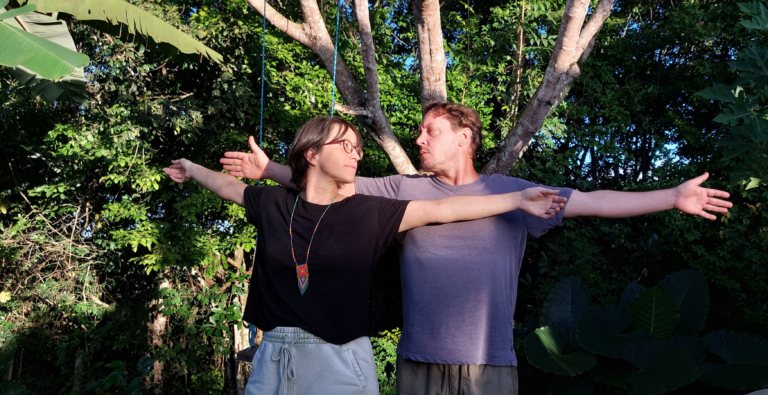
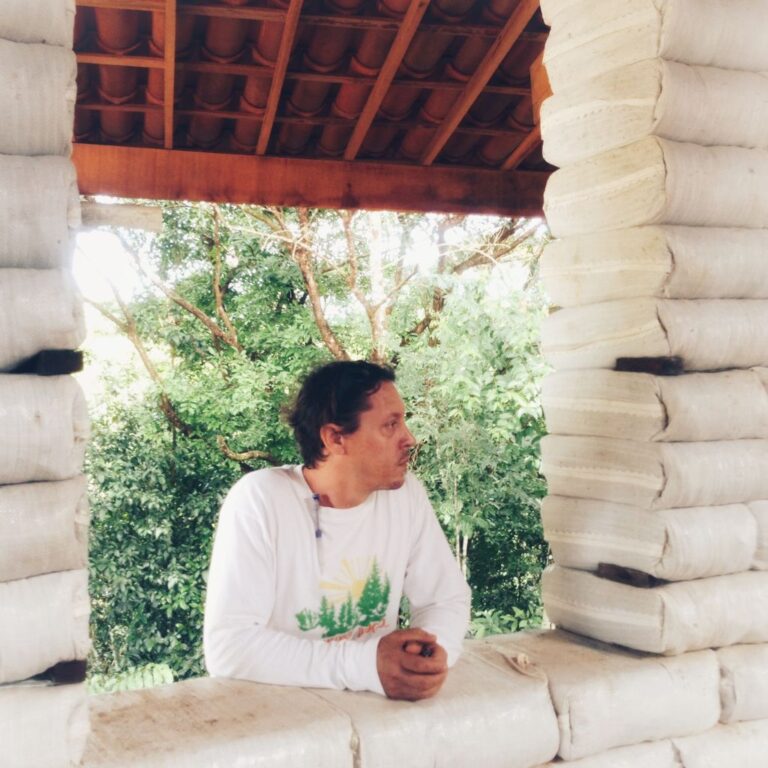
Adam James Phillips
With over 30 years of experience in the construction industry, including an extensive career in the electrical union spanning single-family homes, high-rise apartments, nuclear and coal power plants, and a project at NASA in Cape Canaveral, Adam transitioned his focus in 2014 to sustainable living and permaculture design. Since then, he has dedicated his expertise to building Casa Urucum and continuously exploring innovative, eco-friendly construction techniques that harmonize with nature.
Clara Bezerra Phillips
Clara’s background in education and community engagement has been instrumental in shaping the vision of Casa Urucum. From coordinating robotics programs at Carnegie Mellon University to pioneering the first maker space within a school in Pernambuco, she has consistently worked to empower communities through innovation and learning. Today, she merges her passion for education and sustainability by designing courses that promote eco-living, bioconstruction, and regenerative practices, inspiring others to build a deeper connection with nature.
We’re thrilled to share that Casa Urucum was featured on “Cidades e Soluções” with André Trigueiro, a program that highlights innovative sustainability projects across Brazil.
Our Journey
In 2014, while studying permaculture, Clara, a South American, and Adam, a North American, moved to Brazil to further their studies in sustainable construction. During their permaculture courses, they discovered natural building techniques and began experimenting with earthbag construction.
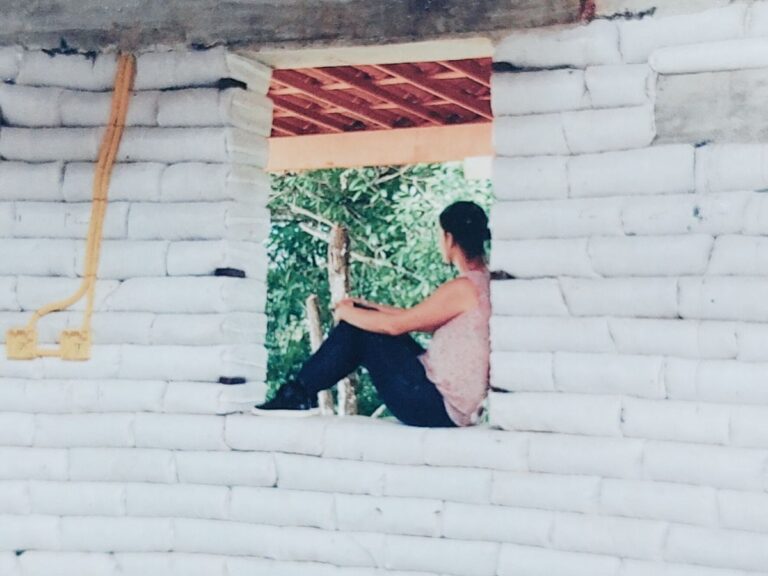
Using 1,386 bags, the South and the North came together to build their eco-friendly home—Casa Urucum. A home designed, envisioned, and constructed with deep respect for nature.
After completing their home, they continued exploring and experimenting with different building techniques. Their storage room was transformed into a Tiny House, repurposing a 20-foot container and expanding it with additional rooms. They incorporated wattle and daub, natural paint, a bathroom finished with Tadelakt plaster, reclaimed concrete salvaged from the streets, and bamboo posts woven together to support the daub.
Natural Building
Eco construction, sustainable building, vernacular architecture are some of the words use to describe a building approach that is designed to work with nature and not against. It is designed to minimize environmental impact, while creating symmetry between the structure and its surrounding natural elements. Some sustainable practices that have been long-employed in eco construction include using materials found close to the job site, studying local conditions to promote thermal comfort, designing a water path, and implementing local ancestral techniques. More recently, as access to information has expanded and demand for green building techniques has grown, wattle and daub, rammed earth, adobe, and earthbag techniques have all resurfaced as accessible, sustainable practices in eco construction.
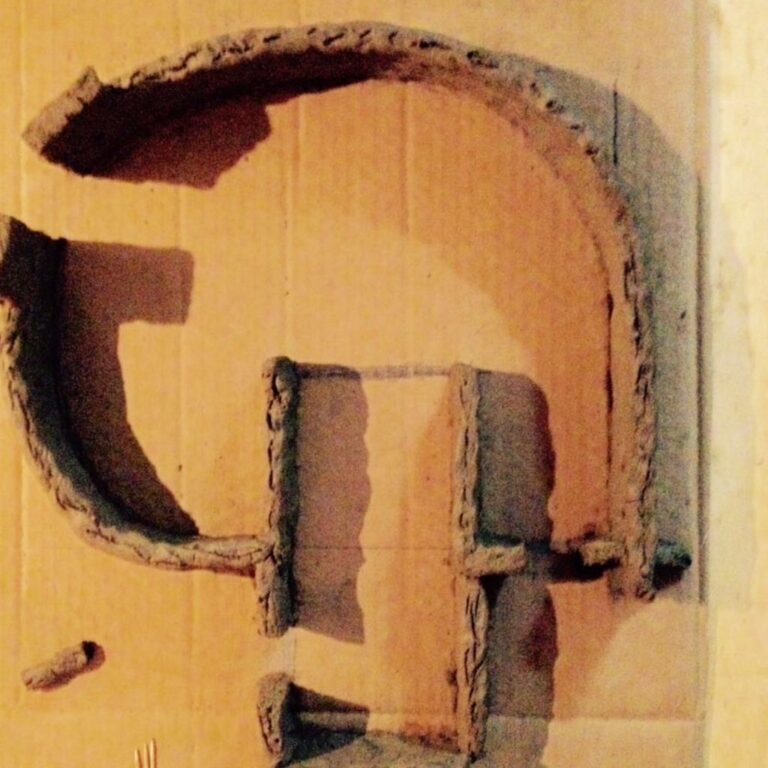
“Love dirt? Wear it proud. Coming soon.”